

Contents and more…
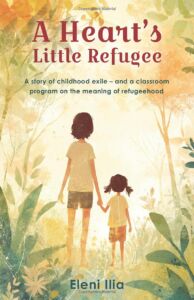
A Heart’s Little Refugee
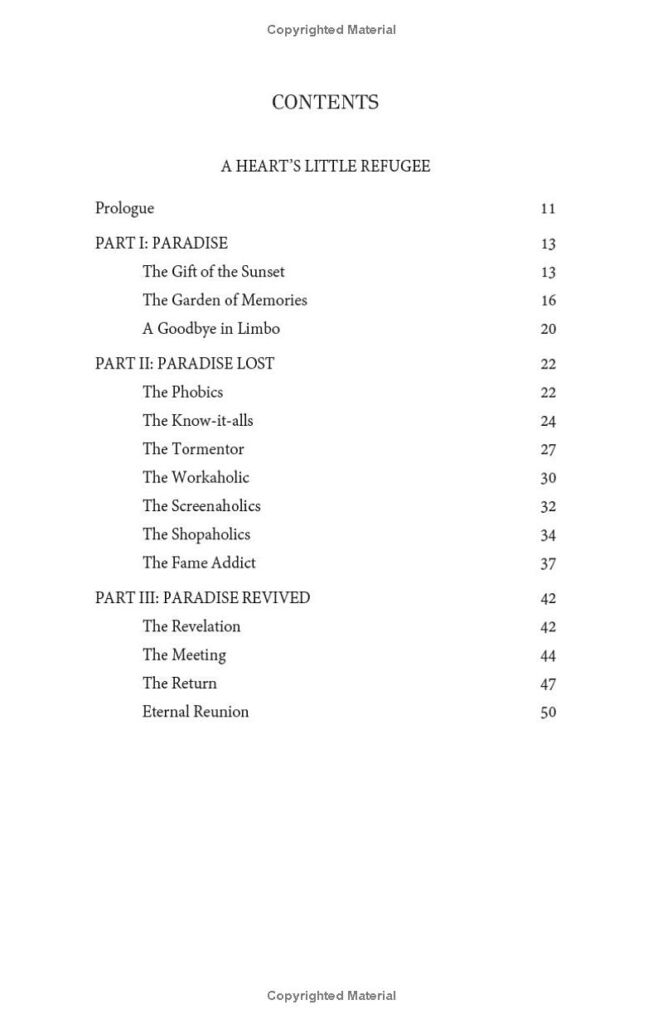
Prologue
Part I PARADISE
The Gift of the Sunset
The Garden of Memories
A Goodbye in Limbo
Part II PARADISE LOST
The Phobics
The Know-it-alls
The Tormentor
The Workaholic
The Screenaholics
The Shopaholics
The Fame Addict
Part III PARADISE REVIVED
The Revelation
The Meeting
The Return
Eternal Reunion
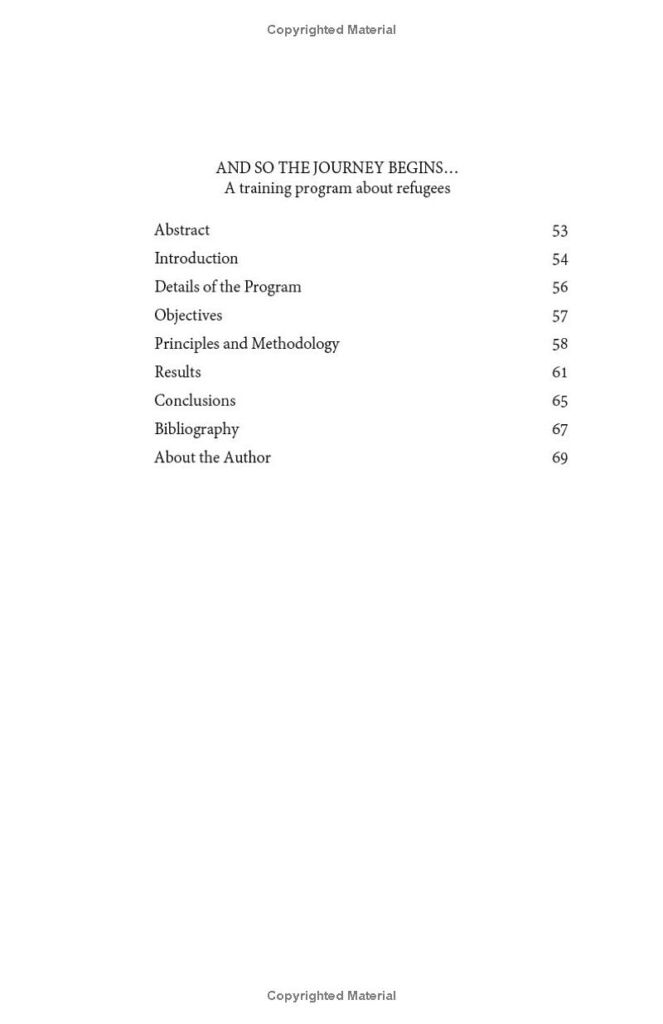
And so the Journey Begins… A training program about Refugees
Abstract
Introduction
Details of the Program
Objectives
Principles and Methodology
Results
Conclusions
Bibliography
About the Author
The phrase “A Heart’s Little Refugee” draws a parallel between a literal refugee experiencing forced migration and loss, and an internal emotional state. The “heart” is the ‘place’ or ‘homeland’, and the “little refugee” is something – possibly a cherished memory, a sense of innocence, or a hope – that has been forced out or lost due to life’s circumstances, trauma, or the passage of time.
Key interpretations and themes include:
-
Loss and Displacement: The core of the metaphor is the experience of being without a safe or proper home, which in an emotional context means a feeling of not belonging or a sense of profound absence after a loss.
-
Memory and Resilience: The “refugee” might carry “echoes of a lost paradise” (a “once-vibrant garden”) and represents the human spirit’s capacity to endure and seek a “new garden” or new sense of safety and belonging.
-
Vulnerability and Innocence: The use of “little” emphasizes the vulnerability and the childhood innocence of the subject of this displacement.
Literary Context
The phrase gained prominence as the title of the book A Heart’s Little Refugee: A story of childhood exile – and a classroom program on the meaning of refugeehood by Eleni Ilia. This book is a poetic, allegorical narrative designed to help children and educators discuss themes of exile, grief, and empathy through storytelling.
The book uses the story of a “mysterious little girl” who emerges from the sea, having lost her garden, as an allegory for real-world refugee experiences, making the phrase a specific literary reference related to social-emotional learning and human rights education.